
Brushes for Wastewater Treatment Plants and Sewage Stations
Maintenance in wastewater treatment plants is very important and brushes help in
several applications.
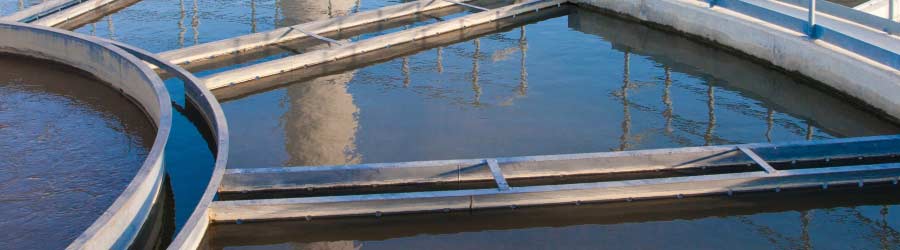
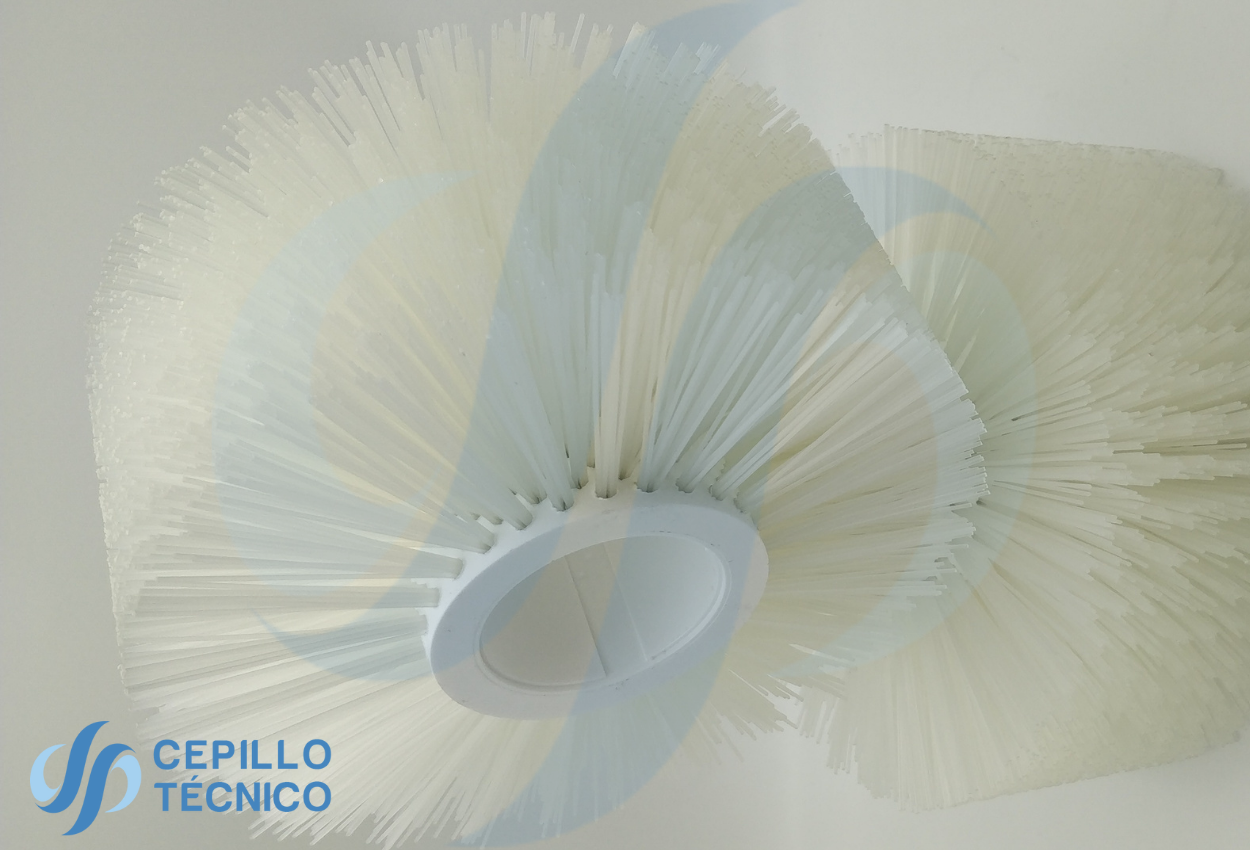
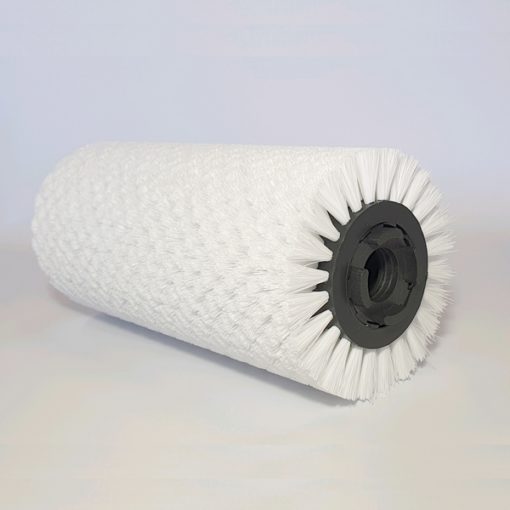
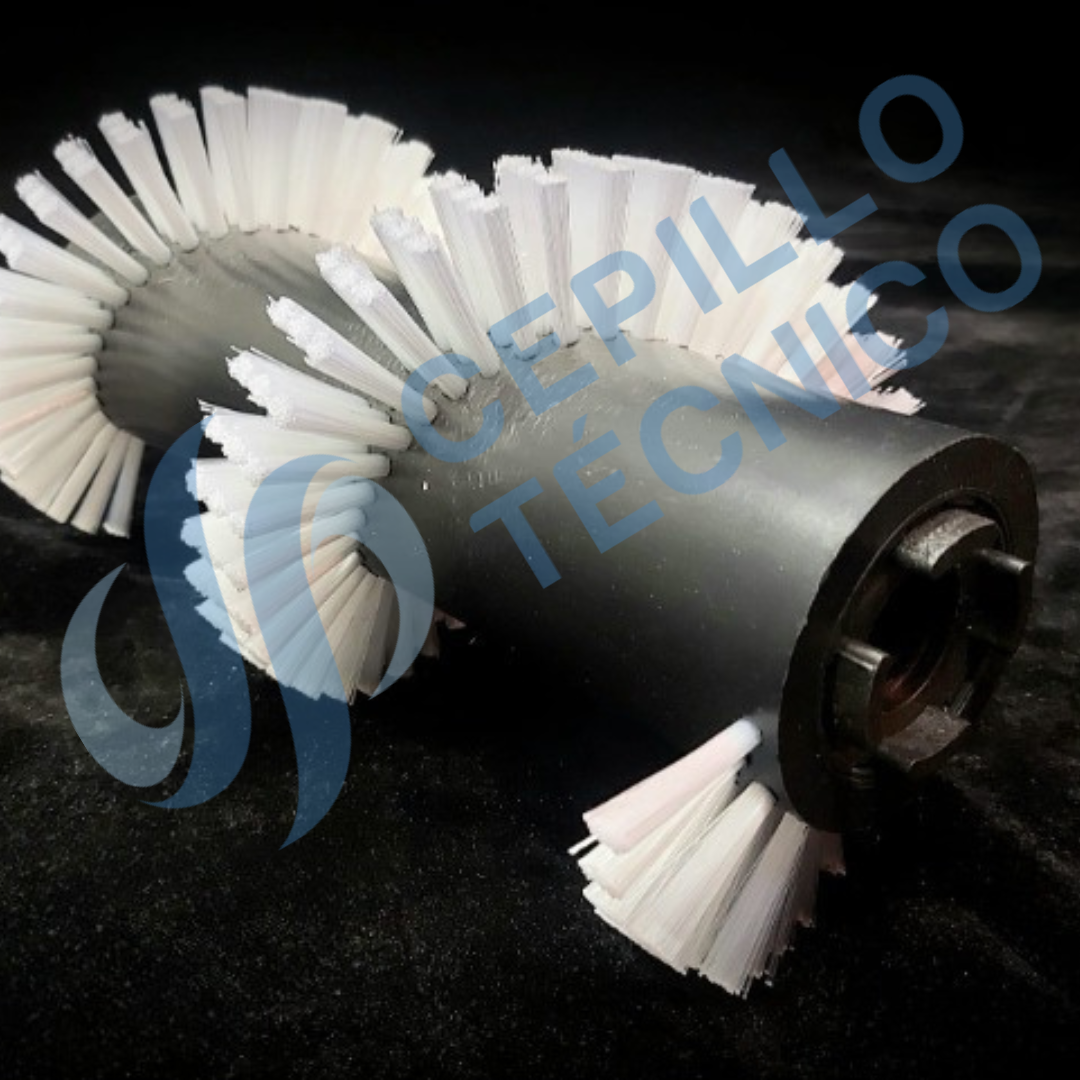
Cylindrical spiral brush for metal screws
From a spillway screen to decanters, industrial brushes are needed to help remove debris and dirt. Spiral brushes for augers, cylindrical brushes and industrial strip brushes are usually the most demanded in this sector. The most frequent failure of the decanter leads to a decrease in performance and is the clogging of a part. This failure is usually due to the adherence of algae, sludge, or various impurities on the walls that can be avoided with suitable brushes.
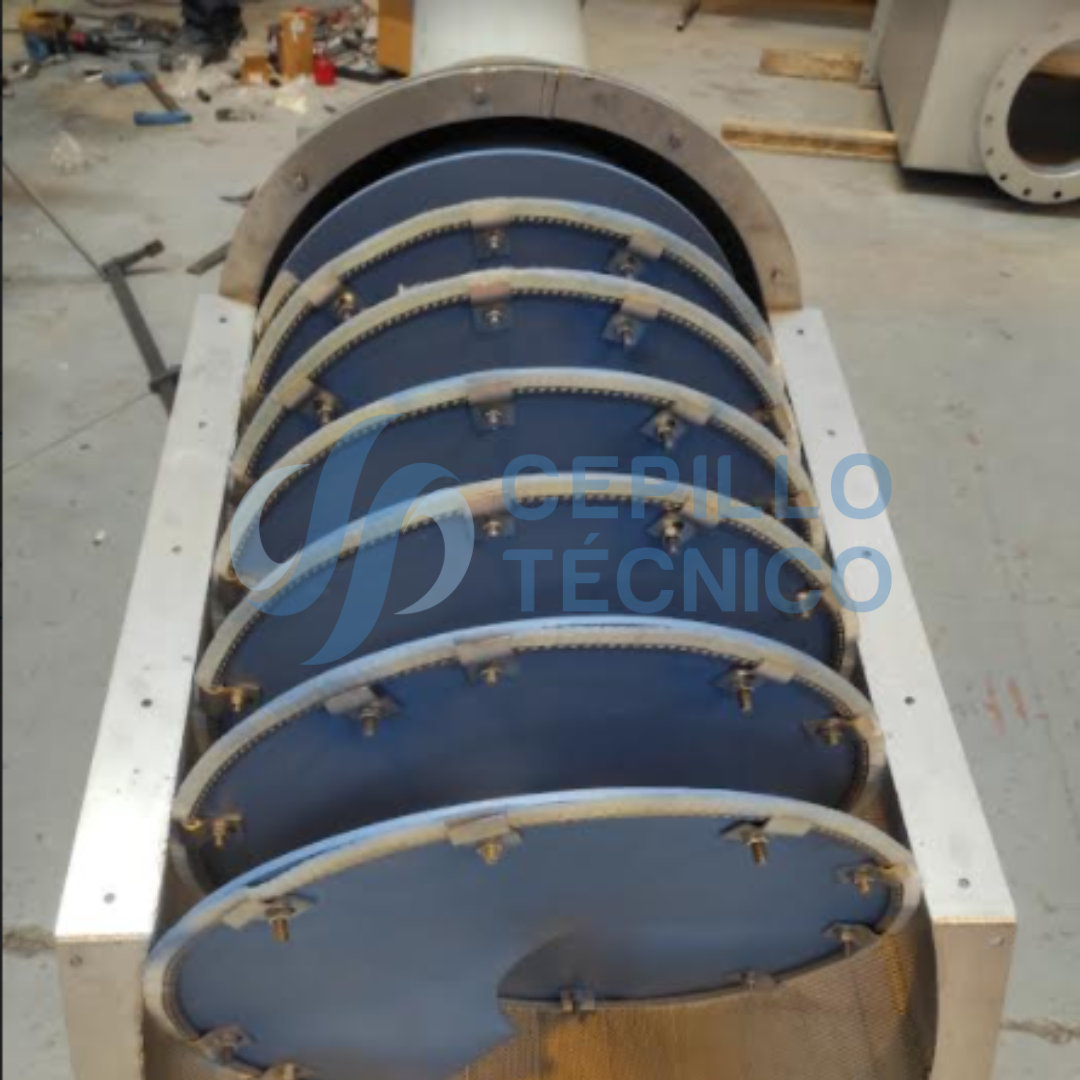
Many companies collaborate with us for the replacement of the spiral cylindrical brushes with metal base on different machines and in particular on spillway screen augers.
We manufacture the spiral brush to the size of the metallic screw and with the fiber outlet capable of covering the gap between the screw and the filtering mesh. With brush bases in steel as well as in stainless steel and polyamide fibers with thick diameters. They are delivered ready to be installed. The brush base can be single or double band to give more resistance to the brush. We have a wide experience, consult with our technicians
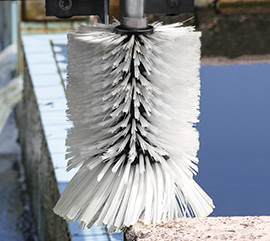
The treatment plants that have decanter installations must perform cleaning tasks of the walls and ducts where the guides circulate since the algae and dirt is fixed on the walls.
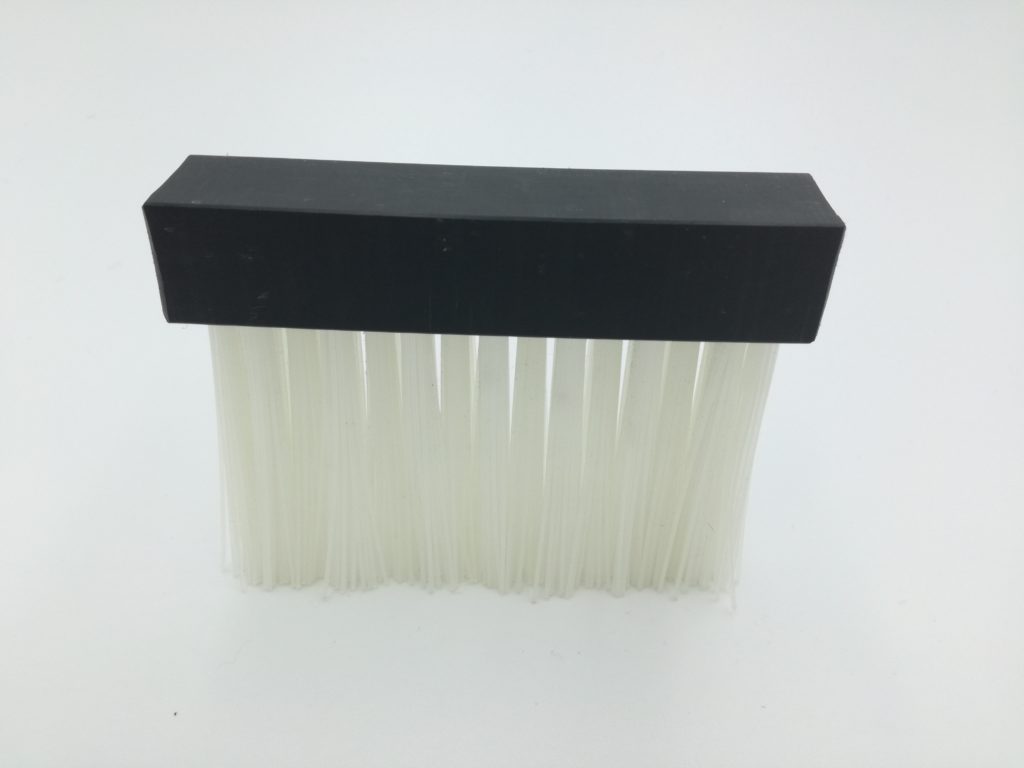
To solve this cleaning we have made several types of brushes, from strip brushes installed on rotating arms that are scraping and cleaning the walls as they pass.
Each WWTP has different types of machinery to perform the necessary waste disposal functions.
We adapt the brush to each application to solve the problem in the most optimal way.
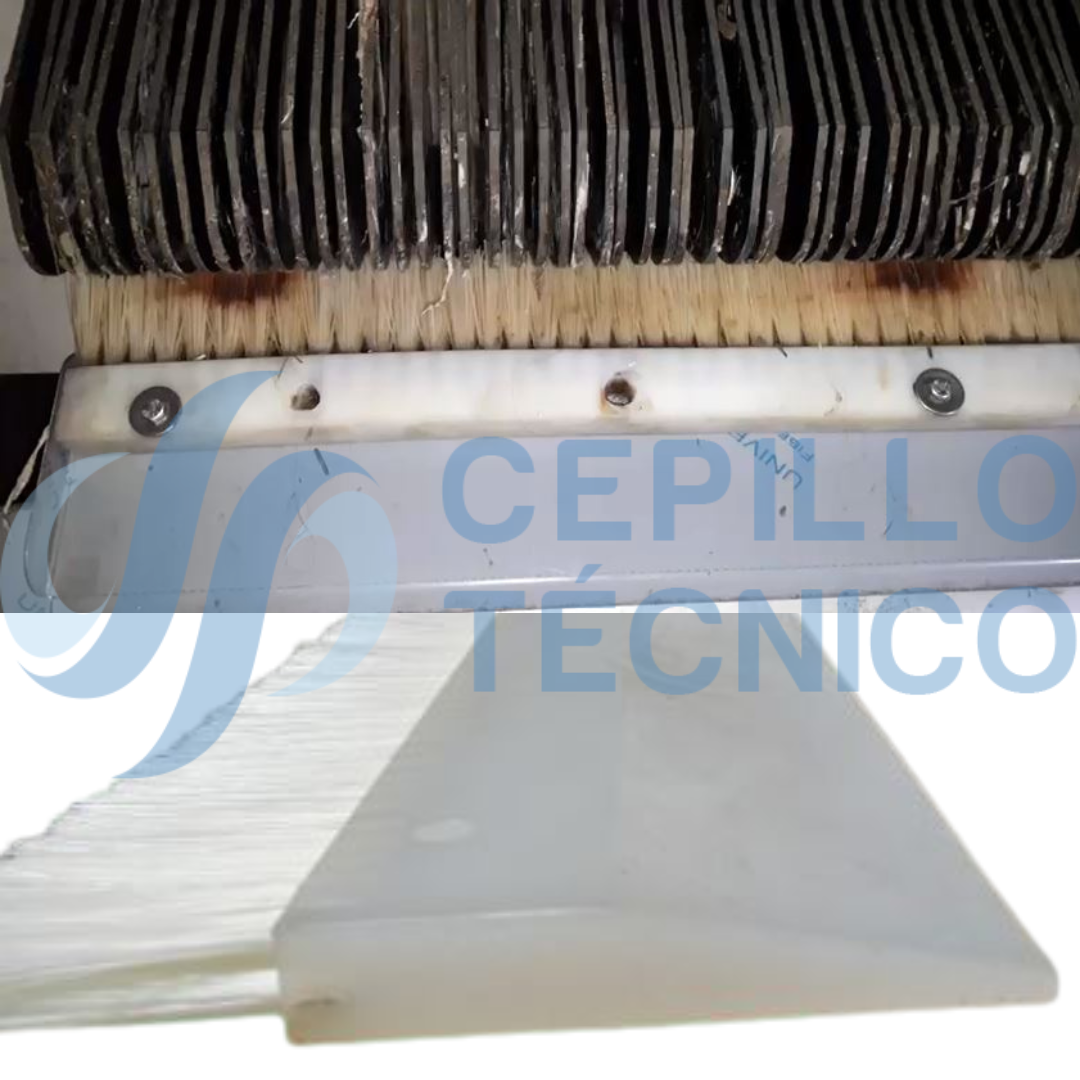
We found that the waste disposal grids were clogged and did not perform their function properly. This grid performed a circular movement, the brush placed behind avoids that dirt particles remain between the grids, allowing an optimal continuous work of this machine. We made new strip brushes to replace the ones that had already deteriorated. In this case, the base also had to have a recess to be inserted into the machine as well as the fixing holes. We have a standard range of strip type brushes or we can make them completely customized according to drawings. Ready to install.
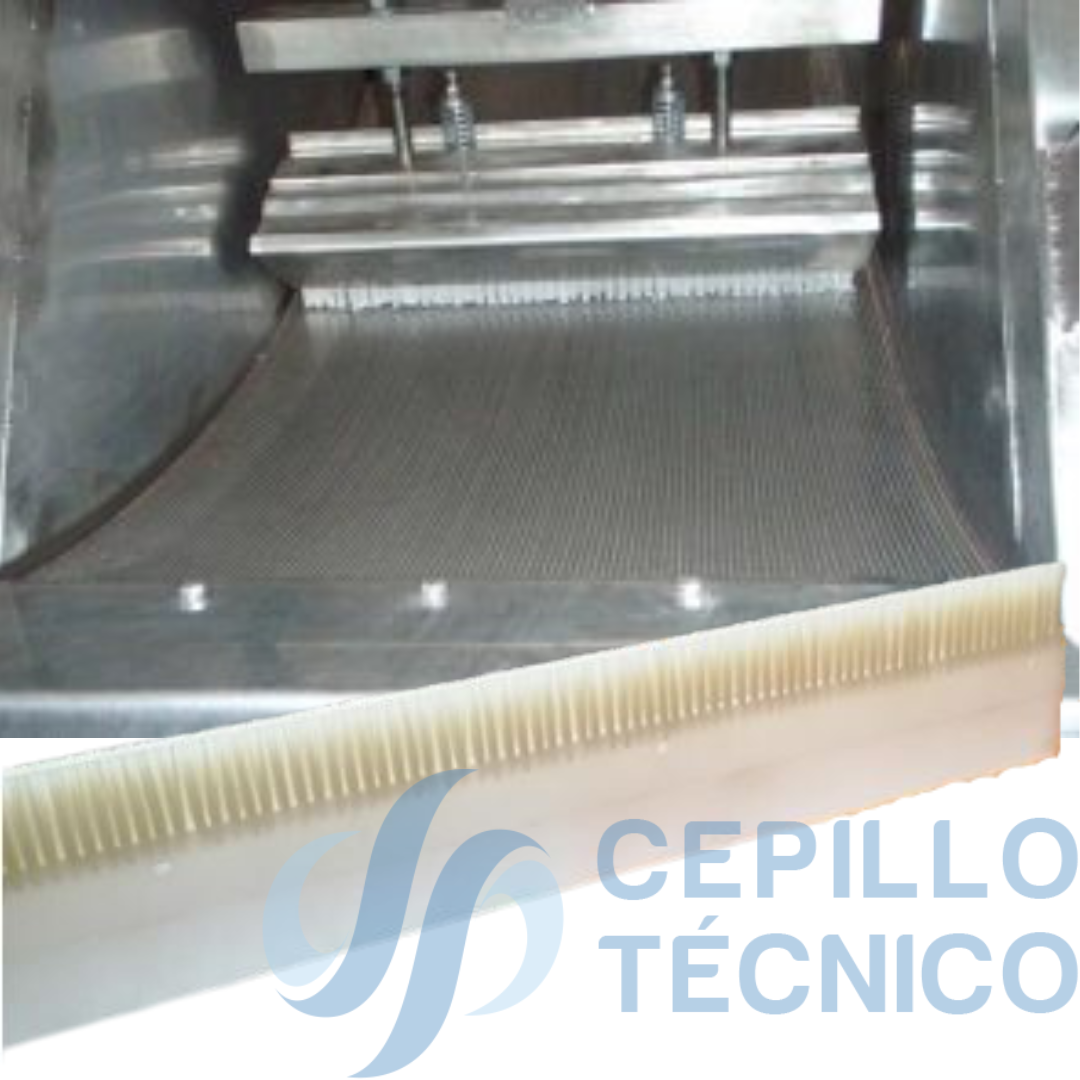
Another repair we performed was the replacement of a lath brush on a screen filtration machine. This type of machine had a strip brush installed with thick fibers to help keep the screen clean and free of debris. The brush arm makes passes over the filtering screen and unclogs the screen of debris.
We can use more or less resistant plastic bases as required by the application, PVC, polypropylene or polyamide, as well as adapt the thickness of the fibers as well as the fiber density of the brush so that it can perform the cleaning with the greatest efficiency.
Contact our technicians for advice.
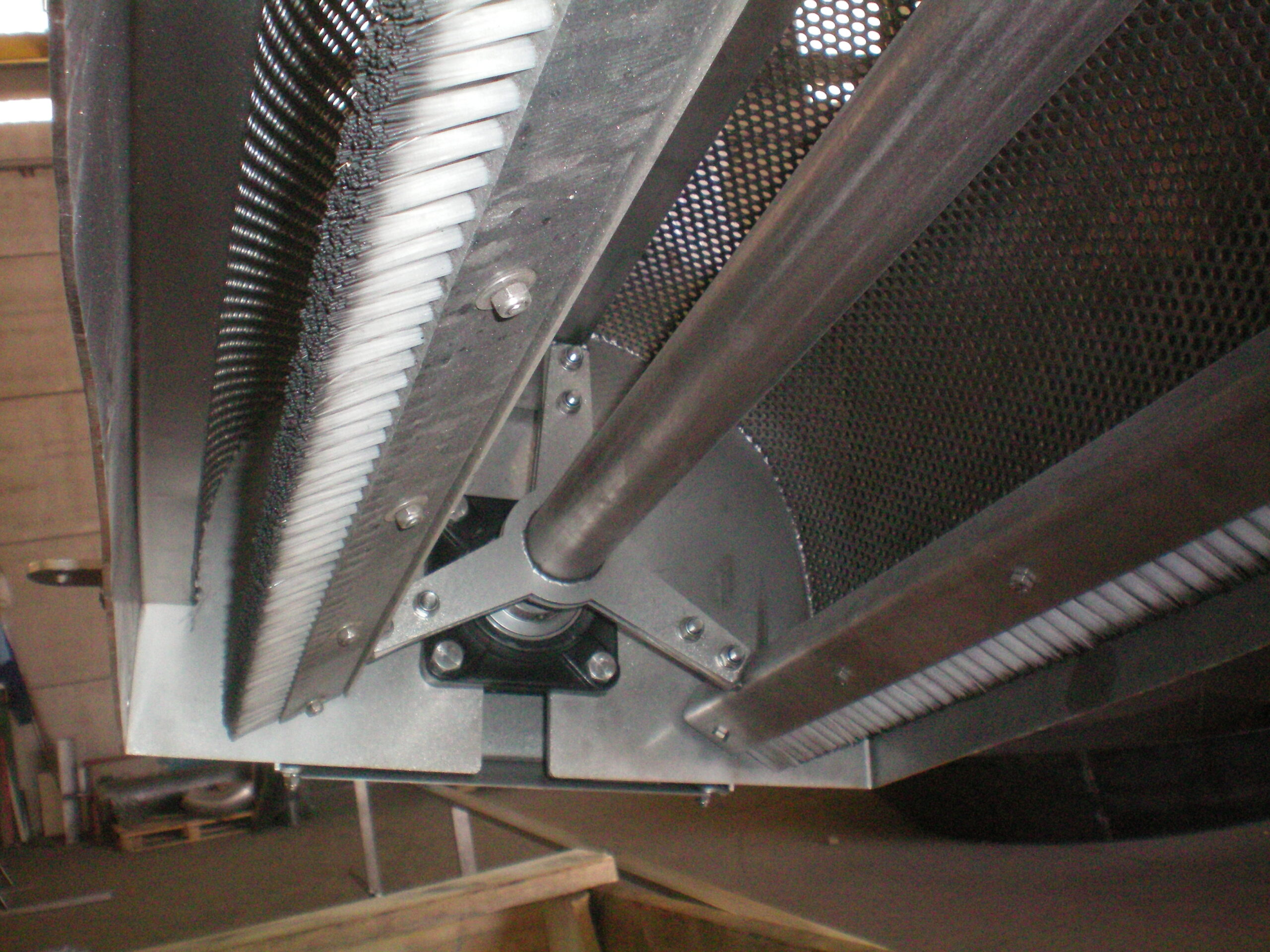
Each wastewater treatment plant has its own machines and although cylindrical brushes are usually used to clean drums with filtering screens, we can also find machines with arms where strip brushes are installed to clean the inside of the drums.
We adapt to the measures and technical needs of the most suitable brush and if it is a replacement we can manufacture the same. You only have to tell us the measures accompanied by our commercial technicians. Our brushes are manufactured here with certified materials and the highest quality and guarantee. Contact with us.
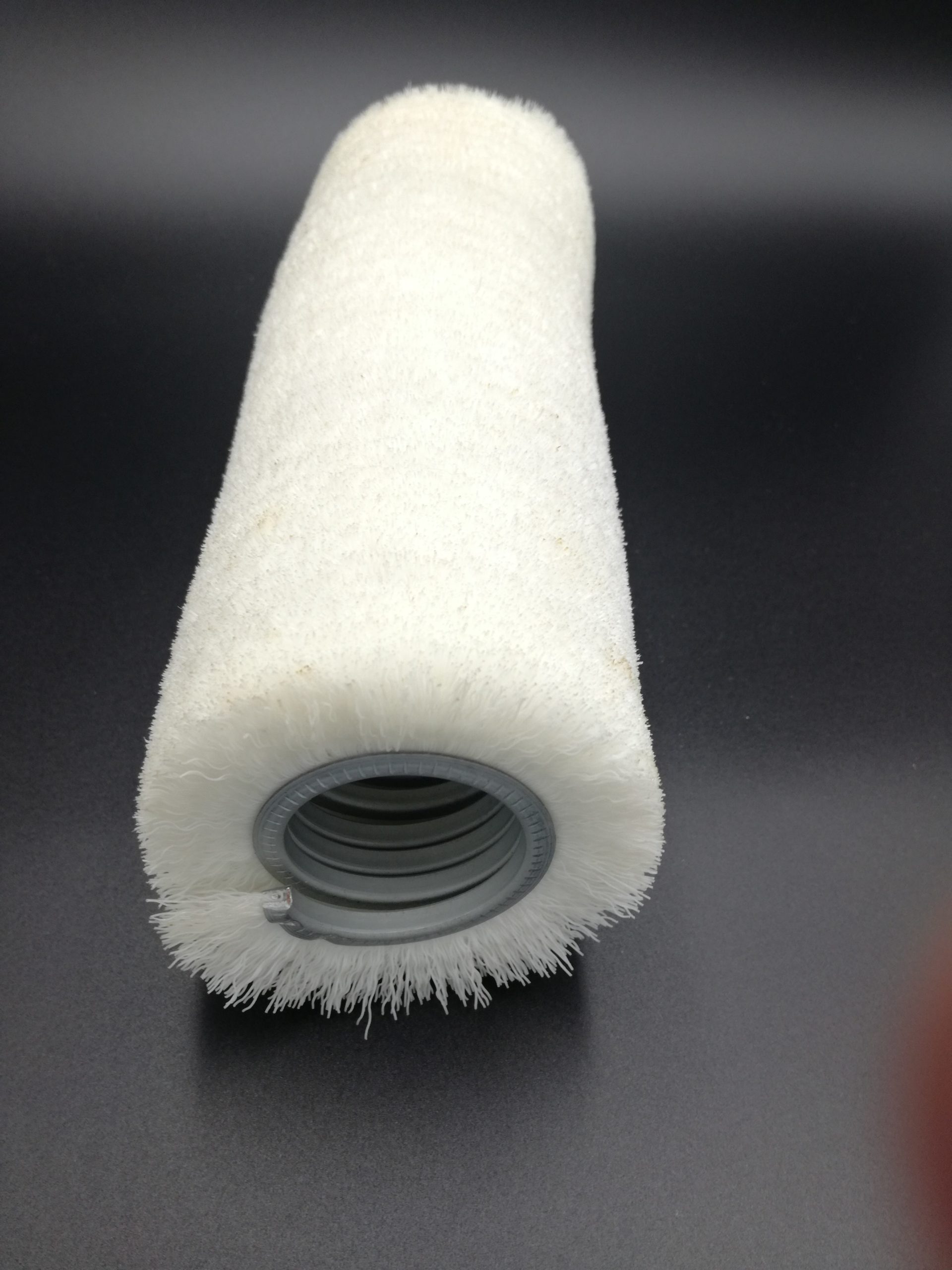
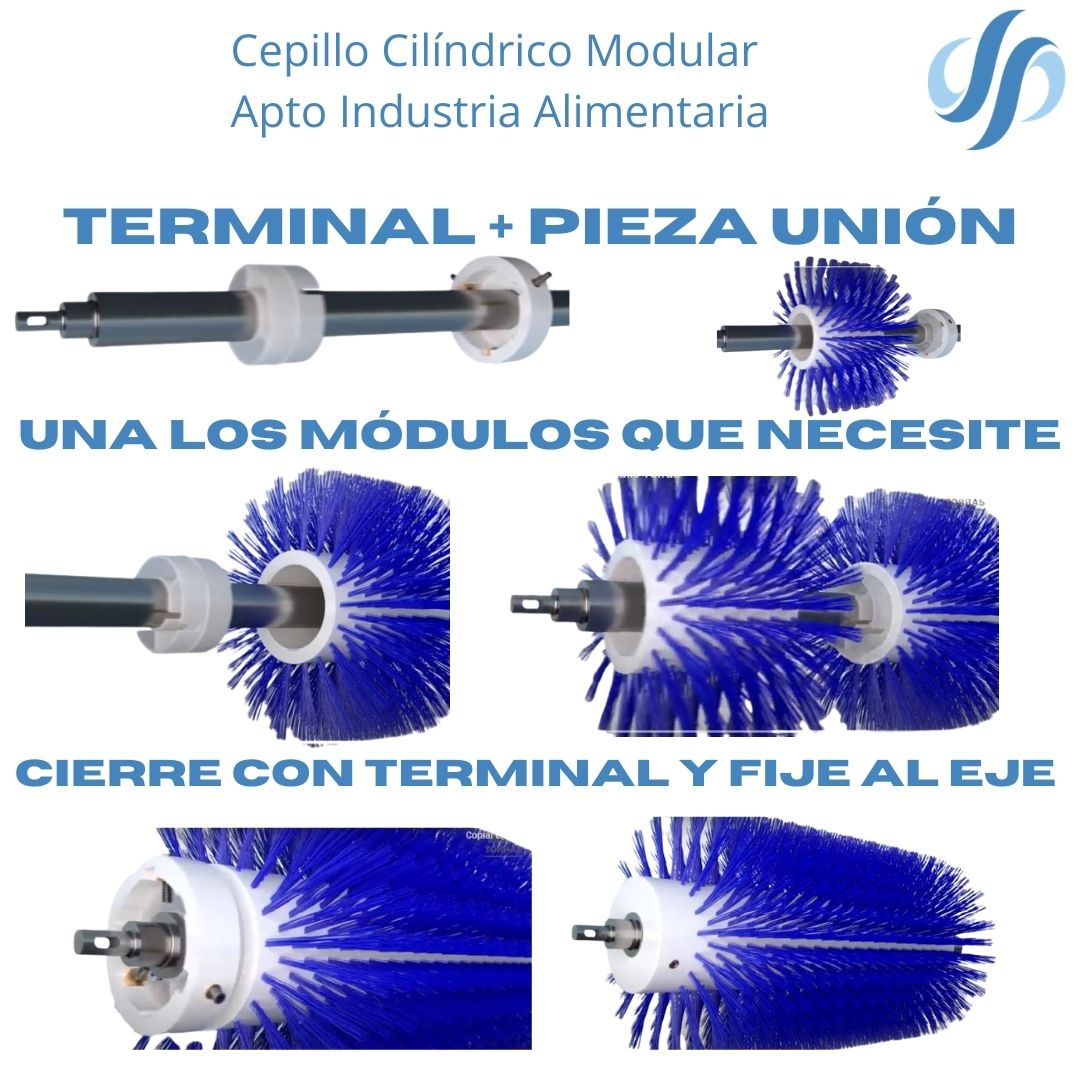
Related posts
![Cepillos industriales en la cerámica española: pulido, esmaltado y acabado Los cepillos industriales en la cerámica garantizan unos procesos de alta calidad. Al tratar con un material tan sensible, conviene usar la herramienta adecuada. Gracias a ella, se podrá pulir, esmaltar y terminar cada pieza con precisión y sin dejar ningún arañazo que pueda arruinar el trabajo realizado. [H2] Tipos de cepillos industriales en la cerámica actual Existen varios tipos de cepillos utilizados en el sector de la cerámica. El primero a destacar es el cepillo Fickert, muy usado para el acabado de bordes y contornos en baldosas o piezas sueltas. Su diseño incluye filamentos rígidos dispuestos de manera radial para que el contacto sea uniforme y el pulido constante. Es un modelo muy efectivo para eliminar irregularidades, algo esencial para realizar esmaltados o vitrificaciones. Otro tipo importantes son los cepillos de disco, que se destinan a tareas de pulido y abrillantado de superficies planas. Debido a su estructura circular y que es posible ajustar la presión, permiten un control preciso del brillo y la textura superficial. Son muy útiles para trabajar cerámicas de gran formato, donde la uniformidad del acabado es crítica. También se adaptan sin problemas a diferentes tipos de abrasivo y compuestos de pulido. Así, facilitan la obtención de acabados mate, satinados o de alto brillo. Por último, los cepillos cilíndricos destacan por su versatilidad y capacidad de cubrir grandes superficies de manera eficiente. Su forma es ideal para lograr un contacto continuo con la pieza y, de este modo, eliminar residuos de pulido y garantizar un brillo uniforme en toda la superficie. Se integran en líneas automáticas de acabado, donde la velocidad y constancia del resultado son factores claves. [H2] Innovaciones abrasivas y aumento de productividad gracias a los cepillos para cerámica La búsqueda de acabados de alta calidad, uniformidad en el brillo y la eficiencia en los procesos productivos ha llevado al desarrollo de diferentes innovaciones. Una de las más destacadas es los filamentos con carburo de silicio. Estos se caracterizan por una elevada dureza y resistencia al desgaste. Un material abrasivo como el mencionado permite eliminar de forma rápida imperfecciones, rebabas o residuos de esmaltado para dejar la superficie lista para el siguiente tratamiento. Los filamentos de carburo de silicio se montan en cepillos cilíndricos o de disco para asegurar un pulido uniforme incluso en las cerámicas de gran formato. También son interesantes los filamentos con diamante sintético al representar el estado más avanzado de la tecnología abrasiva para cepillos cerámicos. Ofrecen una dureza extrema y una estabilidad térmica única. Esto les permite alcanzar un acabado preciso en superficies difíciles o muy duras, como la porcelana técnica o las baldosas de alta densidad. Al usas cepillos que incorporen estas innovaciones en abrasión, se consigue una mayor productividad. Permiten aumentar la velocidad de pulido sin causar daños, reducir los tiempos de parada por sustitución de herramientas u optimizar el consumo de energía, entre otras ventajas. En definitiva, los cepillos industriales en la cerámica cuentan con innovaciones avanzadas. En Cepillo Técnico incorporamos las últimas novedades en nuestras creaciones, que adaptamos por completo a tus necesidades particulares](https://cepillo.cetrexmarketing.com/wp-content/uploads/2026/03/Cepillos-industriales-en-la-ceramica-espanola-Cepillo-Tecnico.jpg)
Cepillos industriales en la cerámica española: pulido, esmaltado y acabado
Los cepillos industriales en la cerámica garantizan unos procesos de alta calidad. Al tratar con…
Cepillos industriales en plantas de reciclaje
Los cepillos industriales en plantas de reciclaje aportan un gran valor. Al incorporarlos en el…
Cepillos cilíndricos industriales: características y aplicaciones clave
Los cepillos cilíndricos industriales destacan por sus excelentes características. Gracias a ellas, tienen un encaje…